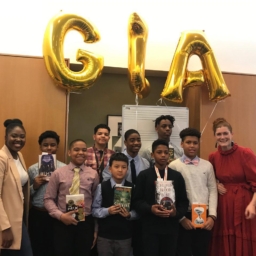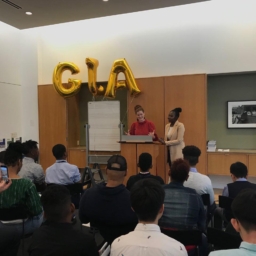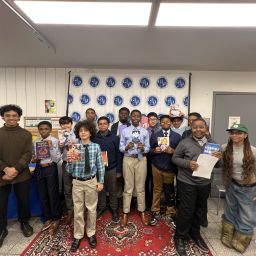
This spring, Hijab and Hannah guided a cohort of senior students through a creative writing journey that defied genre and embraced risk. Their workshop, rooted in experimental, genre-blending, and interdisciplinary approaches, encouraged students to write boldly—to step beyond form and let their voices lead.
The reading list was as rich and varied as the students’ writing:
- There Are Birds Here by Jamaal May
- Pluto Shits on the Universe by Fatimah Asghar
- On Earth We’re Briefly Gorgeous by Ocean Vuong
- Exit Zero by Marie-Helene Bertino
- Anger by Warsan Shire
- First Birth by Sharon Olds
- Bluets by Maggie Nelson
- Tomorrow, and Tomorrow, and Tomorrow by Gabrielle Zevin
From prose to poetry, personal narrative to performance, students responded to these texts with their own original creations—merging humor, vulnerability, and truth in every line.
Over the course of the semester, Hijab and Hannah saw a meaningful shift in their students’ confidence and curiosity. Seniors became increasingly eager to experiment with new ideas, styles, and forms—often discussing their drafts with excitement, even if unfinished.
“We’re always surprised by how brilliant their writing is,” the Fellows shared.
“Even the shyest students have come up to us with their notebooks, asking us to read what they’ve written. It’s a privilege to witness that trust.”
One standout moment came during a class where the Fellows introduced a video performance of Fatimah Asghar’s “Pluto Shits on the Universe.” The poem’s humor, rage, and rawness resonated deeply.
“The students got excited in the best way. They laughed, they gasped, they analyzed. They spoke about marginalization, identity, power—and they connected with the poem on multiple levels. Since then, we’ve brought more performed content into class.”
These moments weren’t just exciting—they were formative. Students learned that writing is not always quiet or solitary. It can be embodied, collective, loud. And that literature is not only for the classroom—it belongs to them.