Joy, Voice & The Unpoetic Life of August Grey
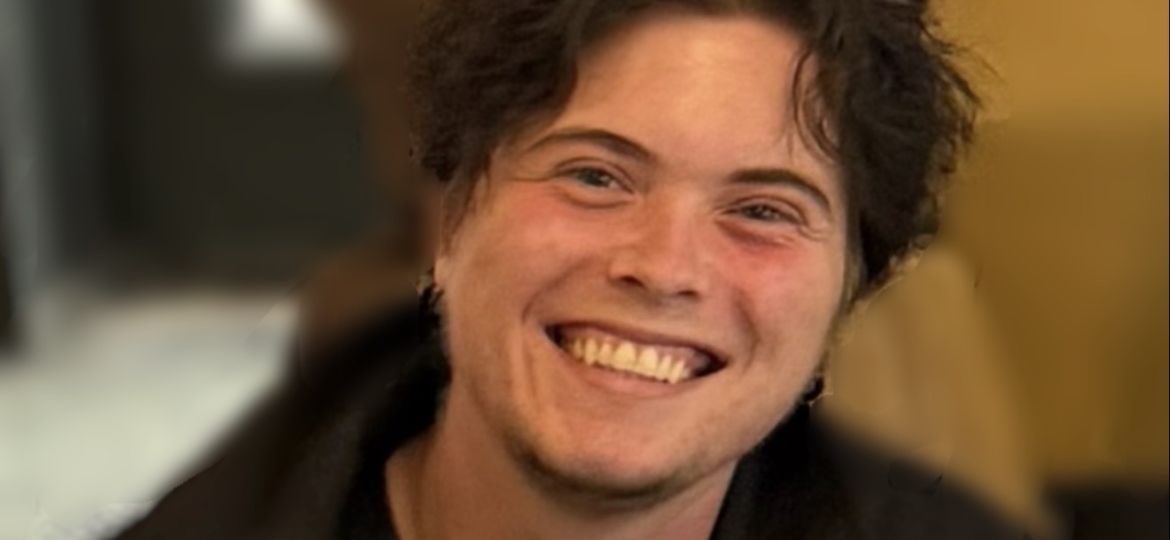
Max Fischer turns classrooms into catalysts—for students, for stories, and for a debut novel-in-verse that centers a trans teen finding his voice on the page and in the world.
Max arrived at The New School with a background in English literature and theory, more accustomed to analyzing texts than making them. The MFA shifted that lens toward craft, and WriteOn pushed it even further, demanding not only a strong grasp of creative writing fundamentals but the ability to communicate them clearly—and joyfully—to high school students who show up because they want to write, not for a grade.
That experience became central to Max’s thesis and debut: a novel-in-verse built around a summer writing program modeled on spaces like the Iowa Young Writers’ Studio and deeply informed by the energy of WriteOn classrooms. Max channeled the feeling of a room full of teenagers who are “brave, vulnerable, and outspoken,” using prompts, workshop dynamics, and the communal excitement of creative writing to shape both character arcs and the emotional architecture of the book.
When Max entered the MFA, the plan was clear: write fantasy. Then, on the very first week, an assignment upended everything—write a picture book. Compressing a full story into the spare language of a picture-book script revealed a poetics Max hadn’t been planning to pursue, “like writing a poem” for four- to six-year-olds, and opened the door to verse.
The road to the thesis, though, was not linear. Max tried drafting the book nine separate times, throwing out roughly 80,000 words of poetry in a single year. Under the guidance of thesis advisor Andrea Pinkney, the project finally crystallized around “a few lines of poetry that I liked, and a trans boy, and he’s sad, and I don’t know why—so I’m going to write into that.” Writing into that not-knowing, and refusing to abandon a trans protagonist even as industry voices warned that such stories might not be publishable in the current climate, became the ethical and artistic spine of the work.
That thesis is now Max’s debut novel, The Unpoetic Life of August Grey, a young adult novel-in-verse forthcoming from Scholastic. Centered on August, a trans boy who has come out but whose transition has stalled in a painful in-between—socially, emotionally, and physically—the book follows him through a writing program where craft, community, and self-recognition become inseparable.
Publishing with Scholastic carries particular weight: as a child, Max resisted reading until annual trips to a Scholastic warehouse book fair in rural Ohio cracked something open. Knowing that August’s story will live in that same ecosystem—circulating through schools, libraries, and book fairs—means that young readers who are already brave enough to live their truth might now also see that truth named on a cover, in a trans boy’s name on the spine.
Max’s broader ambition is to tell as many different trans stories as possible, each one offering a distinct vantage point on gender, embodiment, and joy. In his follow-up to his debut novel, Max is working with a protagonist who has already physically and socially transitioned, opening up new questions and possibilities.
Across these projects, Max is interested in accessibility: in the way poetry can feel intimidating to many readers, much like transness can feel abstract or “other” to those who haven’t encountered it closely. By marrying lyrical verse with grounded, character-driven storytelling and always steering the arc toward hope—joy that persists “no matter how many tragedies befall you”—Max aims to make both poetry and trans experience legible, intimate, and deeply human.
For Max, the urgency of publishing trans stories now is inseparable from a wider crisis of empathy and a wave of book bans that target queer and trans narratives in particular. Books, especially those written for and with young people in mind, compel readers to inhabit someone else’s perspective for an entire narrative, building the muscles of attention and care that public discourse often erodes.
Looking ahead, Max hopes that when future readers study this era—its censorship and its backlash—they will also see the persistence of queer and trans life: “No matter how many books they try to ban, more books will still come.” To young writers, including former and future WriteOn students, Max offers two pieces of advice: protect the joy of writing by letting it be for you first, before publication enters the picture; and keep everything—diaries, drafts, failed experiments—because even abandoned pages can become vital archives of who you were and how you learned to speak on the page.
Max Fischer’s journey—from MFA student to teaching fellow to published author—isn’t just a personal triumph. It’s a model of what becomes possible when young writers are encouraged, seen, and supported. And it’s a testament to what WriteOn helps build: not just workshops, but the future of literature.